














































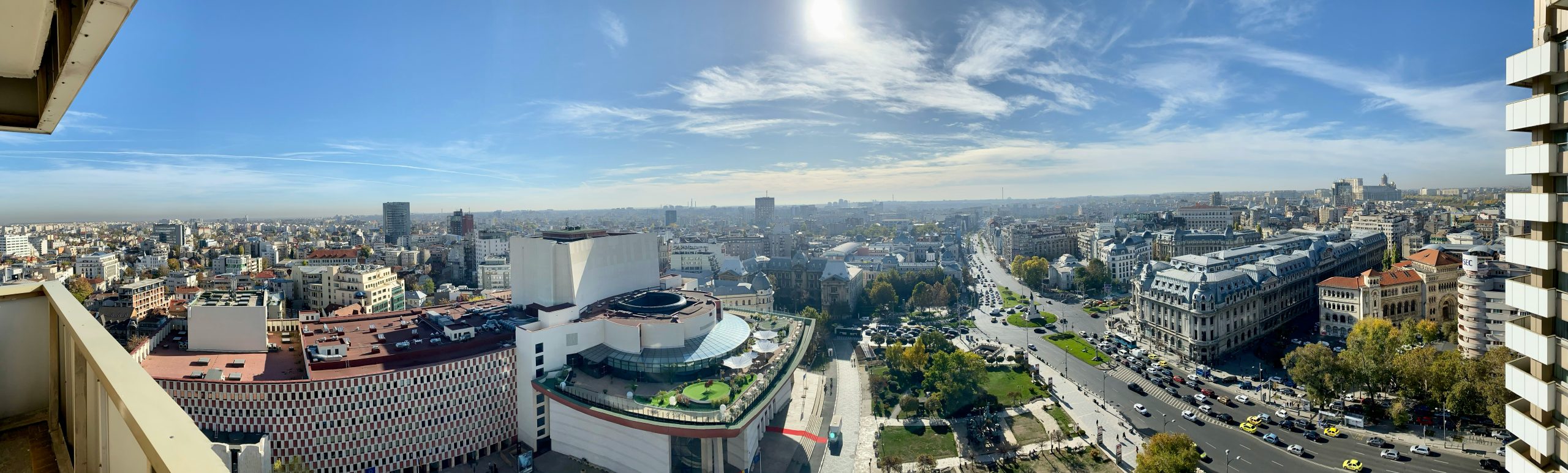
In a context of sharply rising energy prices and increasingly stringent regulations, energy performance is no longer just a recommendation – it is a necessity for building operations. It has become a performance standard, a competitive advantage, and a key enabler for the sustainable functioning of buildings.
Energy efficiency: what it is and why it matters?
Energy efficiency means using a smaller amount of energy to achieve the same result. It brings numerous benefits, such as reducing carbon emissions, increasing energy independence, and lowering costs.
According to the European Union’s current commitments, final electricity consumption must decrease by 11.7% by 2030. This target underpins the EU’s strategy to increase the share of renewable energy sources and minimize dependence on imported fossil fuels.
How can energy efficiency transform buildings across Europe?
The revision of EU legislation – aligned with the climate goals for 2050 and the reduction of emissions by 2030 – opens new opportunities to accelerate the decarbonisation process in the building sector.
At the European level, buildings are among the largest energy consumers, accounting for 40% of final energy consumption and generating 36% of greenhouse gas emissions.
Moreover, 8 out of 10 buildings are energy-inefficient, causing significant energy losses and high costs for occupants.
Improving the energy performance of buildings plays an essential role in achieving climate neutrality. Accordingly, EU Directive 2024/1275 requires all new buildings to reach zero-emission standards: starting January 2028 for public buildings and January 2030 for all others, with certain exceptions.
A zero-emission building is defined by improved energy use and the elimination of carbon emissions. In addition, Member States must develop national renovation plans and long-term strategies, which will be monitored through regular reporting.
What does energy efficiency in buildings in Romania mean?
In Romania, buildings have a high energy consumption due to the fact that they were constructed without high energy efficiency standards. However, there are government policies and programs that encourage responsible energy use.
Approximately 93% of buildings in Romania were built before 1990 and do not meet current performance standards; they have not been modernized for decades, which means that twice as much energy is lost as is necessary to maintain thermal comfort in the building.
Romania has 242.000 public buildings, whose energy consumption exceeds 200–250 kWh/m², compared to the recommended average of 140 kWh/m². Adjusting consumption to the recommended European level would generate annual savings of over 6 billion lei.
To meet the new objectives regarding the efficient use of energy resources, Romania must expand and accelerate building renovations, prioritizing those with the highest losses (in classes E, F, and G), in order to bring them up to level B or A.
Smart thermostats – an ally of building energy efficiency
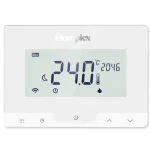
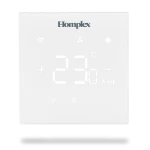
For buildings, ensuring a comfortable climate is essential for the productivity and well-being of occupants. Temperatures that are too high or too low can even affect their performance. In this context, smart thermostats for commercial buildings – such as the Homplex HTV2320 – are a concrete example of technology that supports optimal energy use in buildings. They allow automatic temperature adjustment, ensuring a stable and pleasant environment for all occupants.
Although a smart thermostat may seem expensive at first, it should be considered a long-term investment. Its cost is typically recovered in about a year, and energy expenses can be reduced by up to 25%.
What equipment and solutions does Homplex offer?
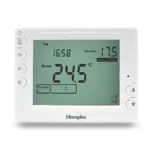
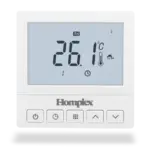
At Homplex, a wide range of thermostats is available – programmable, non-programmable, and smart – designed to provide precise adjustments, full control, and scheduling tailored to the needs of each space.
Non-programmable/manual thermostats (wired or wireless):
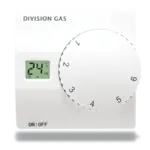
Non-programmable models are the simplest type of thermostat. They are very easy to use, practical, and the most cost-effective option.
Programmable thermostats (wired or wireless):
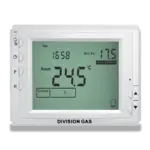
This type of thermostat provides more precise control and a higher level of comfort. Programmable thermostats allow you to set different temperatures throughout the day and configure specific schedules for each day of the week.
Wi-Fi Thermostats
Wi-Fi thermostats offer all the functionalities of a programmable thermostat, with the added benefit of remote control. They allow you to set different temperatures for multiple hours and days, and scheduling can be done directly from a smartphone via a Wi-Fi connection
Homplex provides you with precise, tested thermostats designed for long-term comfort.
Choose the model that suits your project, and we’ll take care of the rest. Comfort isn’t improvised – it’s properly regulated!


No Comments yet!