








































Romania’s alignment with European energy infrastructure standards
Over the past decade, the European direction in gas infrastructure has focused on two major objectives: increasing network safety and modernizing the systems.
In accordance with European requirements, gas transmission operators have been obliged to develop development plans. In this context, Transgaz SA has prepared the National Gas Transmission System Development Plan for the period 2024–2033, updated in 2025, which outlines strategies for network expansion and modernization.
By highlighting existing and planned capacities, the document provides a clear picture of infrastructure evolution and ensures that investments effectively meet both current and future needs.
Modernizing the network involves not only extending pipelines but also using more durable components and materials to reduce the risk of leaks and ensure more reliable and efficient operation.
In this context, fittings represent a practical solution that meets the requirements of modern networks, helps prevent gas leaks, and supports the optimal functioning of the system.
The issue of gas leaks in Romania
According to the Intelligent Energy Association, between 100 and 300 gas accumulation incidents are recorded annually in Romania.
Romania is among the countries with the oldest natural gas distribution networks in Europe. In certain sections, old steel pipelines are still in use, which have a higher failure rate compared to modern polyethylene pipes – used in current infrastructure.
Gas losses often occur due to weak joints made with non-compliant or low-quality fittings. The use of certified fittings significantly minimizes leaks, prevents microcracks or deformations in pipeline connection areas, and ensures more durable network operation.
Fittings: role and importance in gas networks
In gas infrastructure, fittings play a crucial role by ensuring continuity and directing the flow in areas where pipelines intersect, branch, or change direction.
High-density polyethylene (HDPE) fittings are preferred in modern projects, offering strength, reliability, and quick installation. They are present at all stages of operation and development of a gas distribution system, serving specific functions.
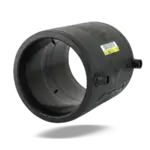
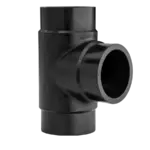
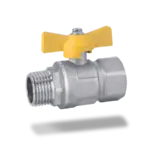
Fittings are also available in multiple sizes and configurations: elbows, tees, couplers, mechanical joints, and accessories – suitable for any type of installation.
- Elbows are used at points where pipelines change direction.
- Tees are employed at intersections or branch points.
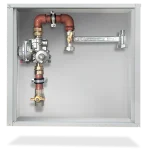
- Couplers and reducers allow gas meters to be connected to the network.
- Mechanical joints and accessories are used for network expansions or emergency interventions.
What fittings does Homplex offer?
Homplex brings AGRULINE PE 100-RC fittings to the Romanian market, an innovative technical solution designed for durability, prevention of premature cracks, and minimization of maintenance costs for gas networks.
Regardless of the complexity of the installation, a partnership with us provides confidence and predictability at every stage of the project. You get the equipment you need, benefit from the technical expertise required to choose the right fittings for field conditions, and also receive post-installation technical support.
Moreover, all AGRULINE fittings distributed by Homplex are made from PE 100-RC (RC = Resistant to Cracks).
The main technical advantage of PE 100-RC is its significantly higher resistance to slow crack growth. This results in installation cost savings, increased safety, and extends the overall system’s lifespan by up to 50 years.
What are the advantages of AGRULINE fittings?
1. Extended lifespan
The main differentiator of AGRULINE fittings, distributed by Homplex, is the use of PE 100-RC polymer, an improved version of standard PE 100. This type of polyethylene is specifically designed to offer better resistance to point loads and the stress cracks they generate, as well as to prevent crack propagation.
2. Reduced installation costs
The fittings can be installed on almost any substrate, significantly reducing costs. In addition, they are ideal for trenchless installation, have extremely high resistance to point loads (such as stones), and can even be installed without a sand layer.
3. Durable performance
The AGRULINE pipeline system, made from PE 100-RC, is resistant to overpressure and seismic activity, and is available in a wide range of external diameters (from 20 mm to 2500 mm).
4. Stable and versatile welded joints
The fittings allow the creation of durable joints through butt fusion or electrofusion welding with heated tools. Long-term creep tests show that welded joints have a considerably longer lifespan under extreme conditions and provide high load-bearing capacity.
Through the equipment and solutions we provide, Homplex gives you the assurance that your network operates optimally and safely, complying with the highest standards.
The proper functioning of a gas network is ensured by attention to every detail, through customized strategies and high-quality materials.
Discover the AGRU range of fittings here and contact us to receive a personalized offer!


No Comments yet!